
What does a Mediterranean home look like today? Forget the idea that it has to be all white walls, blue accents and rustic furniture. Today’s contemporary Mediterranean homes combine clean architecture with natural materials.
Along the Costa Blanca, new residential projects feel relaxed yet sophisticated, modern without ever feeling cold. Designed for Moraira, Benissa and Calpe, where sunshine, sea views and outdoor living define everyday life.
6 ideas shaping the new Mediterranean aesthetic
At Marva, we see these ideas come to life in very different ways. From minimalist new-build villas to the renovation of a 19th-century family home, there is no single formula.
Here are some of the trends shaping contemporary Mediterranean homes right now:
1. Indoor and outdoor spaces are becoming one
If there is one thing a home on the Costa Blanca should make the most of, it is the outdoors. Large windows, sliding doors, covered terraces and pools define today’s contemporary Mediterranean homes.
Villa Annie is a great example. Its bright open-plan communal areas use large panoramic windows to create a strong connection with the exterior. Outside, the terrace, infinity pool and integrated barbecue turn the garden into another living and entertaining area rather than simply a space to look at from inside.
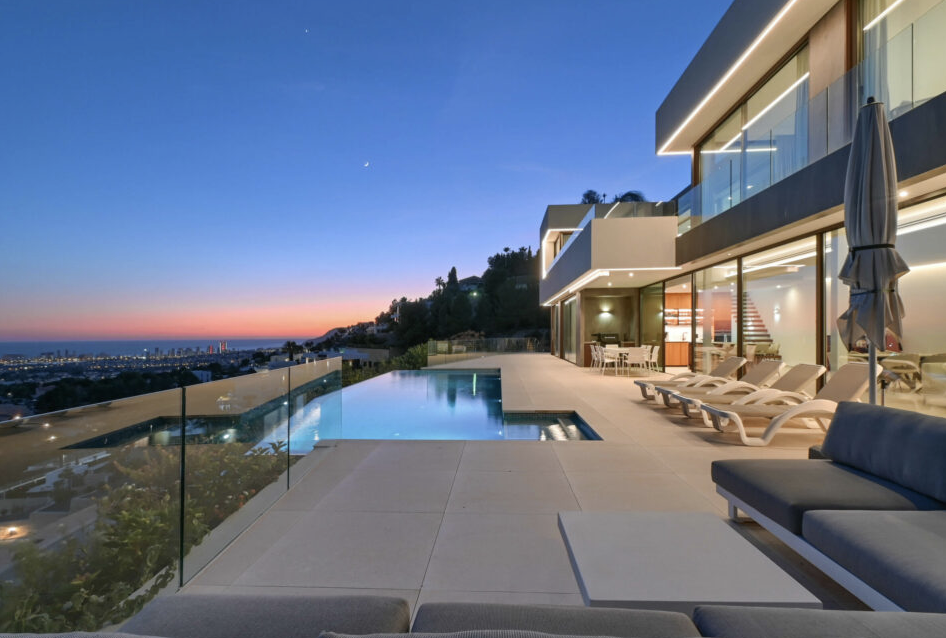
And sometimes the transition can be almost invisible. In Villa Karin, the same porcelain flooring was used inside the house and on the terrace beside the pool. It is a simple design decision, but visually it makes both areas feel like one continuous space.
That is Mediterranean living in a nutshell: open the doors and let the house expand.
2. Natural materials are back, without the rustic overload
Stone, wood, terracotta and textured surfaces have always belonged to Mediterranean architecture. What has changed is how they are used.
Instead of covering every surface, contemporary design gives natural materials room to breathe. A stone wall against a minimalist façade. Warm terracotta beside exposed concrete. Timber used as an accent rather than everywhere at once.
Villa Maroa shows how effective that contrast can be. Exposed concrete defines the architecture, while terracotta flooring adds warmth and balances the interior. Its large sliding doors can also disappear into the walls, reinforcing the connection between the interior, garden and sea.
The lesson? Modern and Mediterranean do not have to compete. Often, the most interesting contemporary Mediterranean homes combine both.
3. Mediterranean decoration is becoming calmer
Good Mediterranean home decoration does not need anchors, shells or ten different shades of blue. In fact, the trend is moving in almost the opposite direction.
Think fewer objects, better materials and pieces with texture or character. Some easy ways to achieve the look are:
- Linen and other natural fabrics
- Handmade ceramics
- Timber or woven furniture
- Warm whites, sand and earthy tones
- Stone and clay details
- One or two statement pieces rather than lots of small accessories
The aim is to make a room feel lived-in and relaxed, not themed. And sometimes the best decorative feature is already part of the house.
4. Old features are being celebrated, not hidden
One of the most appealing developments in Mediterranean design is the renewed interest in preserving original architecture.
Villa Juliette could hardly be a better example. The property dates from the late 19th century and was renovated while maintaining its thick original stone walls and restoring its fireplaces. Natural stone was recovered outside, while handmade clay flooring was chosen to preserve the warmth and character of the house.
But this is not a museum. The kitchen, bathrooms and interior carpentry were updated, and part of the traditional riu-rau area was incorporated into the kitchen to create more usable space. Even tiles from the original kitchen were reused as decorative details.
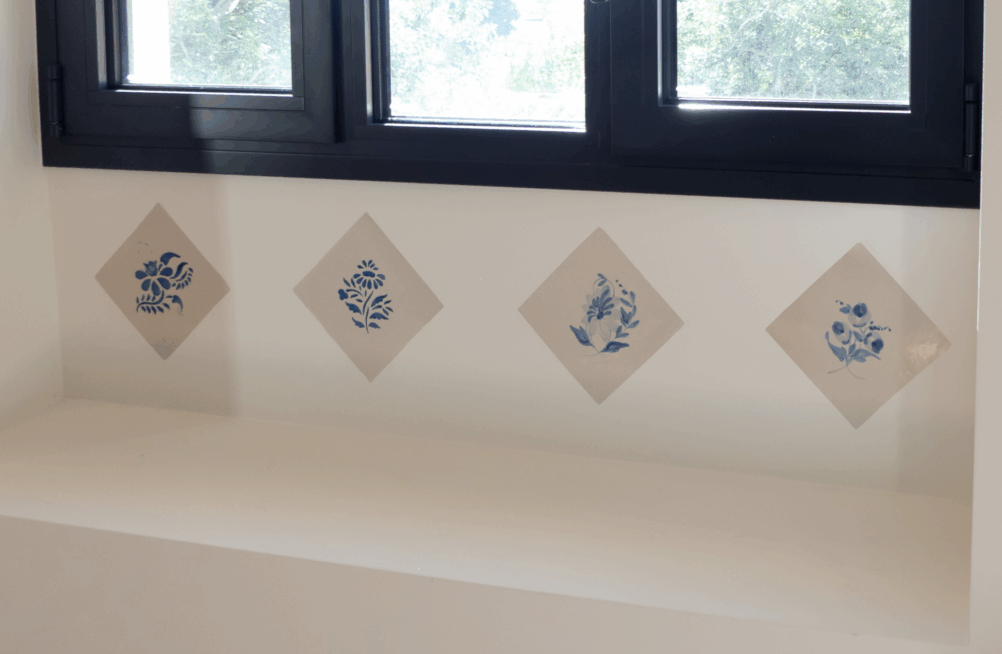
That balance is increasingly important: keeping what gives a property personality while updating what makes it comfortable.
5. Open-plan with purpose
Open-plan living is not going anywhere, but the best layouts are not simply one enormous empty room. Kitchen, dining and living areas need to connect while still feeling like they have their own function.
Villa Zorzal reflects the best of contemporary Mediterranean homes. On the main floor, its modern kitchen connects naturally with the living areas and gives direct access to a large terrace and private pool.
It shows an important principle: good design is not only about how a house photographs. It is about how people move through it every day.
6. Comfort is the real luxury
For years, luxury homes were associated with adding more: more rooms, more finishes, more decoration. Now the focus is shifting towards how contemporary Mediterranean homes actually feel.
Natural light. Shade in summer. Privacy when you want it. A kitchen that works properly. Outdoor areas you really use. Bedrooms positioned away from entertaining spaces. Materials that look beautiful without becoming impractical.
Villa Annie, for example, combines five en-suite bedrooms with spacious communal areas, while Villa Zorzal distributes different uses across three floors. Every home deserves its own solution, because Mediterranean design is never one-size-fits-all.
Mediterranean style is becoming more personal
Perhaps that is the biggest trend of all. The most successful contemporary Mediterranean homes do not copy a predefined look. They take the best parts of Mediterranean living and adapt them to a contemporary lifestyle.
At Construcciones Marva, that can mean building a modern villa from scratch or renovating a family property without losing its history. With more than 50 years of experience in construction, renovations and interior design, every project begins with the home and the people who live there.
Because the best contemporary Mediterranean homes should not just look good. They should make you want to stay.

Noticias relacionadas
Why buyers are choosing investment property in Costa Blanca
A property purchase is rarely just about the building itself. The location, the surrounding...
Mediterranean villages in Costa Blanca for living and investment
The Costa Blanca is easy to recognise in photographs. What is harder to understand...
Property for sale in Benissa: where to buy your next luxury villa
Some places simply have something special, and Benissa is one of them. Set between...

Golf in Costa Blanca: a lifestyle shaped by sun, sea and sport
The golf in Costa Blanca experience goes far beyond the fairways. This region of southeastern Spain...
Why international buyers look for property for sale in Moraira, Jávea, Benissa and Calpe
If you’ve been searching for property for sale in Moraira, you’ve probably noticed how often...
8 things to do in Costa Blanca for an unforgettable experience
The Costa Blanca is known for beaches, but it offers much more beyond the...
Best places to live in Costa Blanca: how to find your dream home in Moraira
If you are thinking about moving to the Mediterranean, chances are you have already...
Lifestyle in the Costa Blanca: a local’s guide to authentic Mediterranean living
There is something unmistakable about life on the Costa Blanca. Not because it stands...